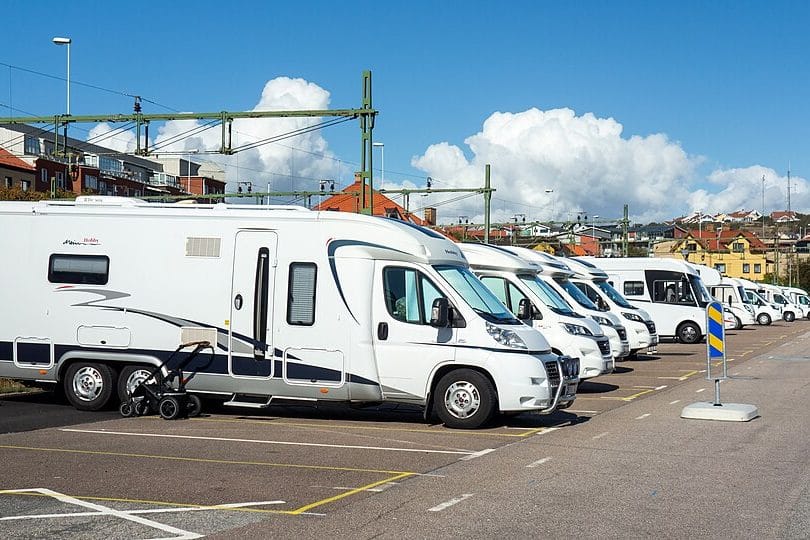
Nearly two-thirds of Britons are planning to holiday inside the UK this year, according to a GoShorty survey published ahead of summer 2026, and a good chunk of them are doing it from behind the wheel of a motorhome or towing a caravan rather than queuing at Gatwick. Rental firms and campsite operators are reporting exactly the pattern you would expect: search interest in staycations spiked hard once flight disruption and the EU's Entry/Exit System started dominating travel headlines, and campervan bookings followed the same curve within weeks. None of that is surprising — a motorhome parked on your own drive skips airport security altogether and lets you change your mind about the destination somewhere around Bristol. What is less obvious is how many of those same owners are setting off this summer with insurance that does not actually match what they are driving.
Touring caravans and motorhomes are governed by completely different rules, and mixing the two up is the single most common mistake made by anyone insuring a leisure vehicle for the first time.
A Motorhome Is a Motor Vehicle. A Touring Caravan Isn't — And Your Cover Has to Match
A motorhome is self-propelled, which means the law treats it exactly like a car: it needs its own MOT once it passes three years old, road tax banded by weight and emissions, and a comprehensive motor insurance policy in the registered keeper's name under the Road Traffic Act 1988. Skip that step and you are not just uninsured — you are committing a criminal offence, and the fixed penalty for driving without valid cover is £300 plus six penalty points, with a court free to hand out an unlimited fine and disqualification if the case escalates that far. A touring caravan works completely differently, because it has no engine and no registration of its own; when it is hitched up and being towed, your car's insurance extends basic third-party cover to it, but that cover stops the moment you unhitch. Leave the caravan on a pitch overnight, at a dealer for repairs, or simply parked on your own drive, and your car's policy has nothing to say about theft, fire, storm damage or vandalism — for that, you need a dedicated caravan policy, sold separately by specialists such as Caravan Guard, Comfort Insurance or Club Care through the Caravan and Motorhome Club.
A dedicated leisure-vehicle policy is worth having even on a modest £8,000 caravan. Relying on the tow car's third-party extension is a false economy that only reveals itself on the day something actually goes missing, and by then it is too late to do anything about it.
What a Proper Caravan or Motorhome Policy Actually Pays Out For
A specialist policy covers considerably more than the theft-and-fire basics most owners expect. Beyond accidental damage and storm cover, policies from insurers such as Caravan Guard or Shield typically include new-for-old replacement on caravans under a set age — usually the first three to five seasons — plus cover for the awning or annexe as a separate item, personal effects and contents inside the van up to a set limit, and public liability if someone is injured by your caravan or its awning while it is pitched. That contents limit is often £2,000 to £3,000 as standard, higher if you declare more valuable kit such as a folding bike or a generator. European touring cover is usually bundled in as standard for a set number of days per trip, typically 30 to 90 depending on the insurer, with a paid top-up available for a longer continental tour. None of this exists automatically on the tow car's motor policy, and none of it exists at all if you are relying on a generic home contents policy to cover a caravan kept two hundred miles from the house it is nominally insured alongside.
Buy the awning cover separately if it is not already bundled in. A canvas or acrylic annexe can cost £1,200 to £1,800 to replace, and several otherwise comprehensive policies exclude it by default unless you specifically ask for it to be added.
The Security Checklist Insurers Are Now Enforcing
Insurers have stopped treating a hitch lock as optional.
For a single-axle touring caravan, the baseline most specialist insurers now demand is a hitch lock plus a wheel clamp whenever the caravan is detached and left unattended for more than two hours — leave it without either, and a theft claim can simply be declined outright. Twin-axle caravans need a step up again: insurers typically want a second wheel clamp, or an active alarm or tracking device fitted as an alternative, and once the caravan's value climbs past roughly £20,000 to £25,000, several insurers, Caravan Guard among them, will only offer terms at all if a Thatcham-approved tracker is fitted. Above roughly £40,000, motorhomes and higher-value tourers increasingly need the top-tier S5 tracker rather than the cheaper S7 option, because S5 systems pair with a driver tag that alerts the monitoring centre the instant the vehicle moves without that tag present — precisely the kind of relay-theft trick a basic alarm cannot catch. If your caravan or motorhome is worth more than roughly £20,000, fit the tracker before you even request a quote; insurers increasingly will not offer terms without one, and turning up at renewal without it just means a sharply higher premium or a flat refusal.
None of these devices can be self-installed if the Thatcham certification is meant to count for anything. Professional fitting is a condition of the discount and, in several cases, a condition of the policy being valid at all — a DIY install voids the certification even if the hardware itself works perfectly.
CRiS, and Why 6,000 Leisure Vehicles Go Missing a Year
Every touring caravan sold through the trade in the UK gets registered on the Central Registration and Identification Scheme, CRiS, run for the National Caravan Council — a 17-digit number etched into every window and logged centrally against the registered keeper, any outstanding finance, and its theft status. It is worth having: most insurers ask for it, and a CRiS check is standard practice before buying second-hand. But it is not the deterrent owners often assume it to be, because something like 6,000 caravans and motorhomes are stolen from UK owners every year, and only around one in five is ever recovered. That gap between registration and recovery is exactly why insurers have shifted so much weight onto trackers and alarms rather than paperwork — a 17-digit etching on a window does nothing to stop a trailer being winched onto a flatbed at three in the morning, it only helps identify it afterwards if it ever resurfaces.
Taking It to Europe: What Changed, and What Didn't
The paperwork panic around driving abroad is mostly out of date: Green Cards stopped being necessary for UK-registered vehicles travelling into the EU and EEA back in August 2021, and a valid UK certificate of motor insurance now automatically provides the legal minimum third-party cover in those countries, and insurers stopped issuing them to motorhome policyholders from January 2022 onward. What has not changed is that European cover is usually capped by days rather than being unlimited: a typical policy bundles in 30 to 90 days abroad as standard before you need to call the insurer and pay for an extension, so a six-week tour of Spain and Portugal needs checking against the exact policy wording before you leave, not after a French gendarme has flagged you down at the roadside.
MOT and road tax are the other two things that quietly expire while you are having a very nice time in the Dordogne, and both need to stay valid for the entire trip, not just the day you set off. Pack the practical extras too: a warning triangle and a hi-vis vest for every seat are legally required in most EU countries, and Spain, Cyprus and Malta still insist on a UK identifier sticker even though the number plate already shows the country code.
The Coverage Gaps That Catch People Out Every Season
A handful of gaps come up again and again once a claims team starts asking questions. More than most owners realise, storage location swings the price sharply — a caravan kept on a driveway behind a locked gate is priced very differently to one left on an unfenced storage compound, and not declaring a change of location correctly can void a claim outright, even a genuine one. Owners also underinsure contents constantly, forgetting the gas bottles, the folding bikes, the awning furniture, and the £400 barbecue that lives in the boot locker all season, while pricing only the caravan itself. More quietly damaging, though, is a lapsed security device: an insurer that required a tracker at renewal will decline a theft claim if the battery died eight months earlier and nobody noticed, among other details that rarely occur to anyone until a loss adjuster asks for the device's service log. Genuinely not knowing the tracker had gone flat rarely helps either — "reasonable care" clauses put the burden on the policyholder to check, not on the insurer to warn.
A Straight Checklist Before You Sign
- Confirm which category your vehicle actually falls into — motor insurance for a motorhome, a dedicated leisure policy for a towed caravan — before comparing quotes, because comparison sites often blur the two.
- A hitch lock and wheel clamp are the minimum even on a modest single-axle van — insurers will ask for proof, and many decline theft claims outright without them.
- Ask exactly what "European cover" means on the policy you are quoted: how many days, which countries, and what a top-up costs if the trip runs long.
- Check the contents limit against what is actually inside the van — gas bottles, bikes, awning furniture, the lot.
- Register with CRiS if the caravan is not already on it, and keep the tracker subscription active, not merely installed.
None of this is complicated once you know where to look, but it is exactly the kind of detail that gets skipped when a caravan or motorhome purchase happens in a rush before the first booked pitch of the season. It is usually the owner who unhitches for a fortnight at a coastal site who finds out the hard way what their policy never actually covered.