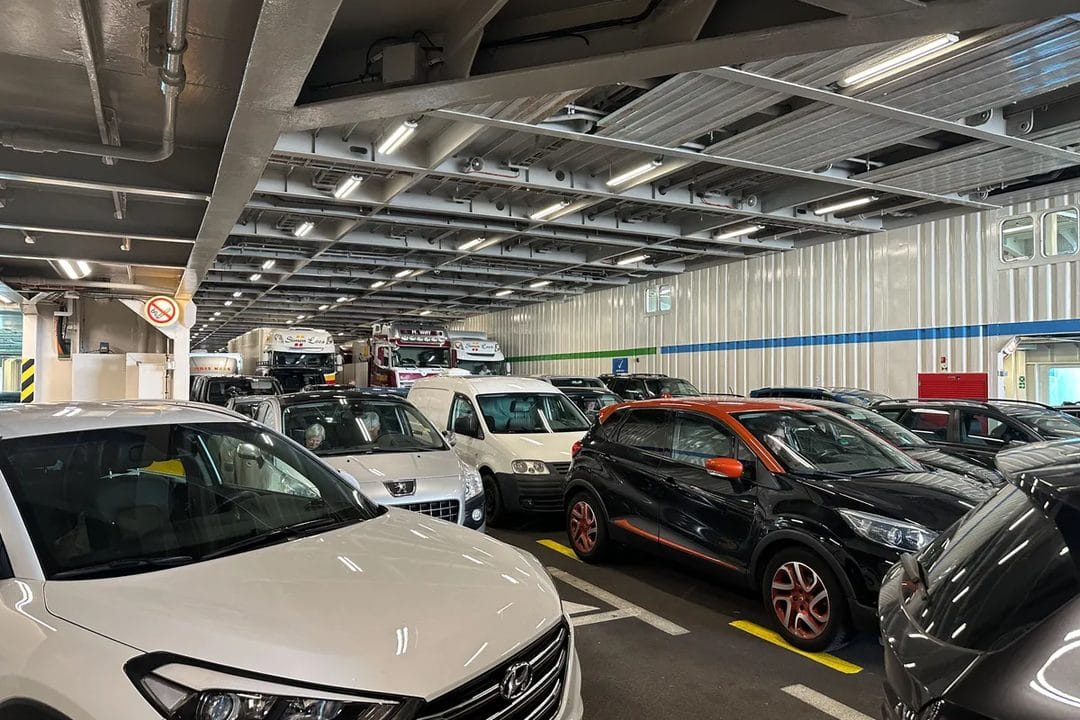
Every July, the same message lands in insurers' inboxes: a policyholder is three days from a ferry crossing to France or a fly-drive out of Faro, and only then do they think to check whether their car insurance actually covers them once they leave the UK. It usually does — but "covers" is doing a lot of work in that sentence, and the gap between what drivers assume and what their policy documents actually say is where expensive surprises live.
The Green Card question is mostly settled — but not entirely
Since August 2021, UK motor insurers have automatically extended the legal minimum third-party cover to every EU and EEA country, which means the old Green Card — the paper proof of insurance that British drivers used to queue for before every continental trip — is no longer required for France, Spain, Italy, Germany, Portugal, Ireland, and the rest of the EU/EEA bloc, along with Andorra, Switzerland, and a handful of neighbouring states. Since 1 January 2025, insurers can also issue a digital version of the card, so anyone who does still need one for a country outside that list no longer has to wait for a paper copy in the post. That "handful of neighbouring states" caveat matters, though. Albania, Azerbaijan, Moldova, Turkey and Ukraine still ask for a physical or digital Green Card at the border, and so do several countries outside Europe entirely, including Morocco, Tunisia, Iran and Israel. If your summer plans involve driving through the Balkans towards Turkey, or shipping a car onward from mainland Spain to Morocco, this is not a box you can tick after you've already booked the ferry. Insurers typically say to allow two to four weeks for a Green Card to arrive, which rules out same-week applications if you've left it late.
Third-party cover is the floor, not your actual policy
Here is the part that catches out even experienced drivers who genuinely believe they've done their homework: automatic EU cover guarantees the legal minimum, not whatever level you've paid for at home. A significant number of comprehensive UK policies quietly step down to third-party-only the moment you cross the Channel, which means your own car — the one you're comprehensively insured on in Woking or Warrington — is suddenly uninsured against fire, theft, or accidental damage while you're touring the Dordogne. Some insurers do maintain full comprehensive cover abroad, typically for a set number of days per policy year (commonly around 90 days), but this varies enormously by provider and by the specific policy tier you bought, not just the insurer's brand name.
The only way to know which category you're in is to read the "Foreign Use" or "Driving Abroad" section of your policy document, or to phone and ask directly, before you travel rather than after a Spanish car park scrape. If your cover does step down, most insurers will sell you a temporary upgrade back to comprehensive for the trip — usually a modest add-on fee rather than a full new policy — but you have to ask for it; it is never applied by default.
Breakdown cover is where the real money sits
This is the single most consistently misunderstood point in UK motoring cover, and it's worth stating plainly: standard UK breakdown membership does not extend to Europe. Not the AA's, not the RAC's, not the one bundled free with your bank account. European breakdown cover is a separate, specifically-purchased product, and skipping it is one of the more expensive false economies available to a UK driver this summer. The numbers explain why it's worth the fifteen minutes it takes to buy. A single-trip European breakdown policy for a fortnight typically runs somewhere between £40 and £100 depending on provider, vehicle, and destination, with per-day single-trip pricing from major providers starting around £5.71. Annual cover tends to start from roughly £100 and pays for itself quickly if you cross the Channel more than once a year. Against that, recovery without cover is genuinely brutal: a straightforward local tow can still run into several hundred pounds, and a full recovery — car, driver and passengers — back to the UK from somewhere like southern Spain has been priced at £1,500 to £3,000-plus when arranged privately at the roadside, with costs pushed even higher if your vehicle needs parts sourced for right-hand drive.
If you've ever wondered why insurance adverts lean so hard on the words "European breakdown cover included" — this is why. It is one of the few add-ons where the maths is not remotely close.
Providers with large continental networks — the AA, for instance, has historically advertised access to tens of thousands of mechanics and recovery vehicles across around 40 European countries — are worth comparing on network size as well as price, particularly if your route runs through less-populated regions rather than motorway corridors.
The paperwork nobody enjoys reading, but should
A few adjacent requirements tend to get bundled into the "insurance" conversation even though they sit slightly outside your policy, and it's worth clearing them up in one go rather than discovering a gap at a toll booth:
- GHIC, not travel insurance. The Global Health Insurance Card gives UK residents access to state-provided healthcare at the same cost as a local resident in the EU — but it is not a substitute for travel insurance, and it does not cover repatriation, private treatment, or lost belongings. Applying is free via the NHS website; there is no legitimate reason to pay a third-party site for one.
- International Driving Permits are the exception, not the rule. A standard UK photocard licence lets you drive throughout the EU, Switzerland, Norway, Iceland and Liechtenstein without an IDP. The permit becomes relevant mainly for older paper licences, licences issued in Jersey, Guernsey, the Isle of Man or Gibraltar, or trips that run past 90 days in a handful of countries — worth a two-minute check on gov.uk if any of those apply to you.
- The number plate sticker. Cars with the "UK" identifier built into the number plate generally don't need an additional sticker within the EU. Vehicles still displaying the old GB-only plate, or heading to a non-EU country, do need a physical UK sticker — the GB version is no longer accepted.
- The V5C logbook — border checks and, occasionally, ferry staff ask to see it, and it's the one document people most reliably forget in a kitchen drawer.
A five-minute pre-trip check that actually earns its keep
None of this requires a broker call for most drivers — it requires reading roughly two paragraphs of a policy document you already have. Before any Channel crossing this summer, it's worth confirming four things specifically: whether your comprehensive cover holds abroad or drops to third-party, how many days that cover lasts if it does hold, whether European breakdown cover is included or needs adding, and whether your destination is one of the small number of countries still requiring a Green Card. Insurers vary enough on all four points that assuming last year's answer still applies is itself a risk — especially if you've switched provider since your last European trip.
The wider pattern across UK motor insurance this year has been insurers tightening exactly these kinds of conditional extensions as claims costs rise, so a policy that offered generous automatic European cover eighteen months ago may have quietly trimmed it at the last renewal. A five-minute phone call now is considerably cheaper than finding out at a Portuguese repair garage.